Learjet 60 N722BD: What the Evidence Says So Far, and What It Doesn't
Three weeks after the Learjet 60 crash in Greenacres, Florida: what the ATC calls, ADS-B track, storm data and the separated left elevator tell us, four possible explanations, and what the NTSB will look at next.
Status as of 22 November 2026. The last update on the NTSB investigation page (ERA27MA026) is dated 9 November, and no preliminary report has been published yet. Everything below is based on public information. Where I offer an interpretation, I say so.
Three weeks after a Learjet 60 went nose-first into Military Trail in Greenacres, the public picture has filled in a fair amount. We know what the crew told Miami Center. We have the ADS-B track. We know a large part of the left elevator came down miles from the crater, and that the cockpit voice recorder is now in Washington. What we don't have is a sequence. And with this accident, the sequence is everything.
What follows is our attempt to put the pieces in order, weigh the explanations people are proposing, and add a few things about the aircraft and its type that have had less attention than they deserve.
The last minutes, as far as we know them
N722BD left Austin-Bergstrom at about 10:37 local on Sunday 1 November, bound for North Eleuthera in the Bahamas with two pilots and seven passengers. The NTSB has identified the operator as Aurora Aviation, doing business as Upper Jets, flying under Part 135. ADS-B shows a climb to FL410 and, later in the flight, the jet settled around FL350 heading east across Florida.
Over the southeast of the state the crew reported light clear ice, which they described as manageable, along with moderate turbulence, and gave an outside temperature of minus 47°C. A little later they reported rain and asked for higher. The controller approved the climb.
The rest happened very quickly. Flightradar24 shows a short climb around 17:48 UTC, then a steep descending turn to the right. The crew declared a Mayday at about 10,000 ft/min, then reported an overspeed at around 20,000 ft/min, and finally called passing 22,000 ft in a 60-degree right bank. The ADS-B data has the aircraft falling from roughly 35,250 ft to 8,750 ft in about a minute, with received vertical rates above 32,000 ft/min. Impact was at about 12:50 local.
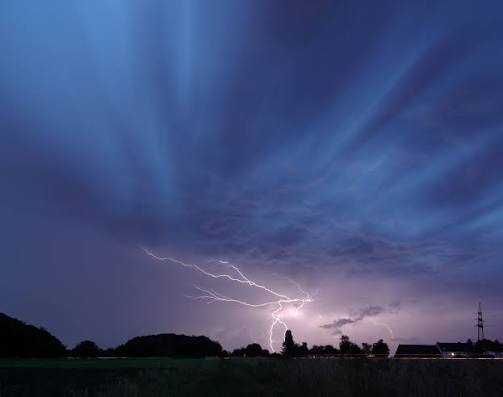
The weather matters here. Thunderstorms were building across South Florida that afternoon. One radar analysis published by MyRadar has a cell near the track growing from about 33,000 ft to 48,300 ft between 12:36 and 12:56, which covers the time of the accident. Put simply, the storm was rising through the level the Learjet was cruising at and the level it was climbing to.
The aircraft: a few things worth knowing
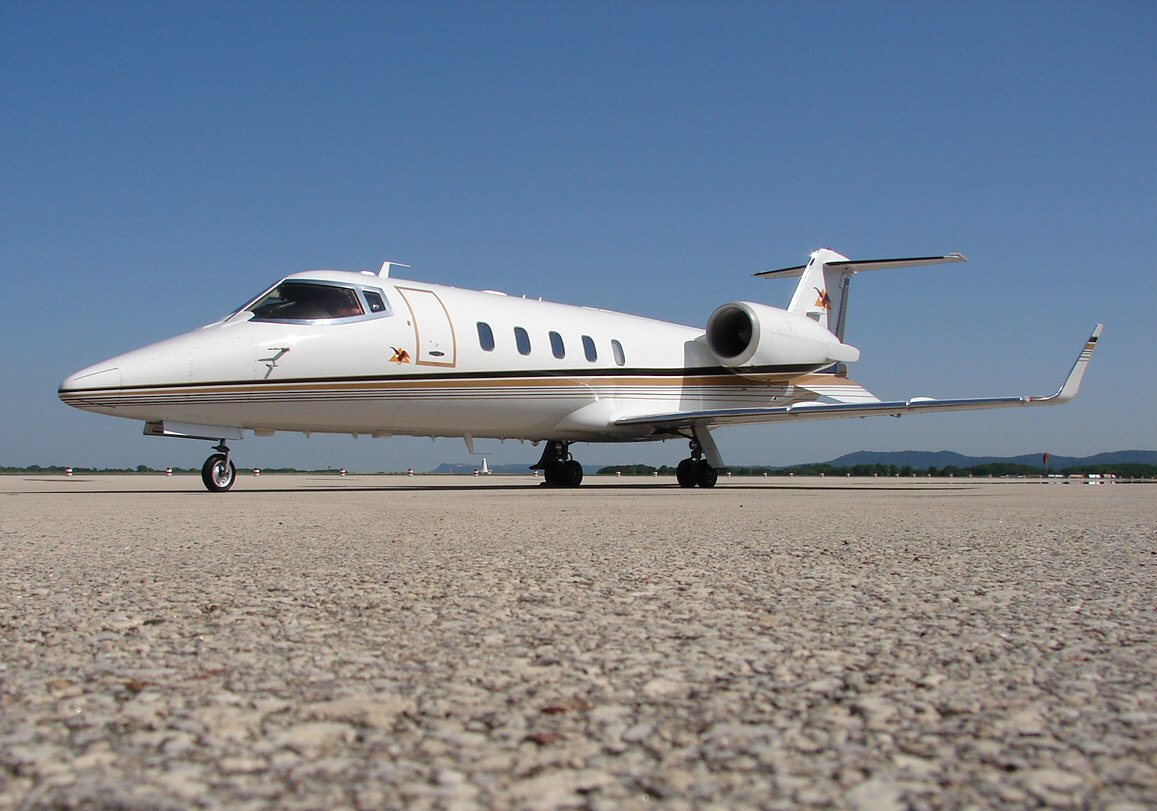
N722BD was a 2004 Learjet 60, serial number 60-271, so about 22 years old. It was one of roughly 300 Learjet 60s still flying, a type that went out of production in 2013. The FAA registry lists the owner as LR60271 LLC, a Delaware company. The airframe was on Aurora Aviation's Part 135 certificate, and the company is based at Fort Lauderdale Executive.
Two details deserve more attention than they have had.
The May 2026 episode near Newark. ATC audio from May, first reported by the Daily Express and the US Sun, has this same registration struggling to hold an assigned 4,000 ft in rough air. The track shows deviations of about 700 ft above and 400 ft below. The crew called the turbulence moderate. The controller didn't accept that: "If you can't maintain altitude, that's not moderate. That's severe turbulence." Both pilots then agreed it was severe.
To be clear: nobody has linked that flight to the accident, and we don't know who was flying it. Still, it raises two questions an investigator would want answered. First, a severe turbulence encounter normally calls for a conditional structural inspection under the maintenance manual. Was one done after May, and what did it find? The records will show. Second, the exchange suggests a crew that, at least on that day, tended to understate turbulence. That isn't a finding about this operator. It's a question about reporting culture that the NTSB will probably ask anyway.
The type's history with tail ice. In 1999 the FAA issued AD 99-16-03, covering Learjet models from the 23 through the 60. It followed severe flight control buffeting on a Learjet 55. The cause was miswired horizontal stabilizer heating elements that let ice build up on the stabilizer leading edge without the crew knowing. The FAA's own wording describes the risk as possible loss of pitch control. I am not suggesting N722BD had that wiring fault. The AD was a one-time inspection more than 25 years ago. What it does show is that the manufacturer and the regulator have already treated undetected ice on the T-tail of this family as a pitch-control hazard. If ice turns out to be part of this story, the stabilizer anti-ice system will be one of the first things examined.
Recorders. The CVR was found at the initial impact site and is being evaluated. The NTSB hasn't said whether a flight data recorder was fitted. Under Part 135.152, an FDR is required for aircraft with 10 to 19 passenger seats, and a Learjet 60 in a typical eight-seat layout falls below that. So the CVR, ADS-B, ATC tapes, radar and wreckage may be all there is. It's also worth remembering what happened with the Learjet 55 medevac crash in Philadelphia in 2025: the CVR there turned out to have recorded nothing of the accident flight. Recovering a recorder doesn't mean it holds useful audio.
The crew
The captain was Jeff Gregory, 55. The first officer was Nathalia Gadelha Filgueiras, 20. According to her family and their lawyer, she had about 1,300 hours, had flown commercially for roughly nine months, and held a Learjet type qualification. Her age has drawn a lot of noise online. Crew experience, cockpit authority gradient and CRM are standard lines of inquiry in any two-pilot accident, and they will be here. But nothing published so far tells us who was flying, or suggests that experience played a part in what happened. Until the CVR is analysed, that debate is guesswork.
The left elevator
At the 3 November briefing, Board Member Tom Chapman said most of the left elevator had been recovered in three pieces, between 1.3 and 3.8 miles from the main impact site. That confirms it separated in flight. The 8 November update lists both stabilizers among the recovered parts but doesn't say where they were found. Dashcam frames circulating online appear to show the jet in its final seconds without its horizontal tail, but the NTSB hasn't confirmed this.
The obvious question is whether the elevator came off first and caused the dive, or whether the dive tore it off. Chapman said plainly that this hasn't been established. The debris spread helps a little. Light control surfaces released at height drift a long way, and pieces spread over 2.5 miles suggest separation well above the ground. But an aircraft dropping 26,000 ft in about a minute also covers a lot of ground, so position alone won't settle it. The fracture surfaces will.
Four explanations, weighed against the evidence
None of these is a conclusion. They're the explanations that have been proposed, or that the data points to, tested against what is actually public.
1. An upset in a building storm top during the climb
This is the explanation that fits the public timeline best, in our view. A Learjet 60 at FL350–370 doesn't have a wide margin between low-speed buffet and its maximum Mach number. Ice on the wing reduces that margin further by raising the stall speed. The crew was climbing, into rain, inside or close to a cell whose top was rising past them. Strong updrafts and downdrafts in that environment can produce large changes in angle of attack and airspeed in a few seconds.
The signature that followed fits. Steep bank, nose dropping, speed building fast, an overspeed call, a descending turn to the right. That's what a high-altitude upset turning into a spiral dive looks like. In this scenario the elevator separation is secondary: the aircraft goes well past its design dive speed, and the tail fails either from aerodynamic loads, from flutter, or from a hard pull during an attempted recovery.
What it doesn't explain on its own is why the upset started. That's where the next two come in.
2. Tailplane stall from ice
A former air safety investigator, Dan Diggins, suggested on 3 November that ice on the horizontal tail may have stalled it, pitching the nose sharply down with almost no time to react. The idea gets attention because it matches the ice report, the T-tail, and the type history above.
We'd treat it with caution, though. Ice-contaminated tailplane stall is classically a low-speed problem. It typically shows up on approach, when flaps are extended and the tail is working hardest to hold the nose up. In clean configuration at cruise Mach, it's a far less typical mechanism. It can't be ruled out, especially if the stabilizer anti-ice wasn't working. But the theory needs more support than it has so far.
3. Ice crystals and unreliable airspeed
The minus 47°C figure is, to us, one of the most interesting details on the tapes. Supercooled liquid water essentially can't exist much below about minus 40°C. So structural "clear ice" at minus 47 is hard to explain. One possibility is that the crew read or reported the temperature wrong. Another is that what they were seeing wasn't classic airframe icing but ice crystals, the high ice water content found near the cores of strong convective cells.
Ice crystals don't build up much on the wings, but they're well known for blocking pitot probes and producing false airspeed indications. Air France 447 in 2009 is the best-known example: unreliable airspeed at high altitude, in convective weather, led to an upset the crew didn't recover from. If something similar happened here (airspeed disagreement, autopilot disconnect, wrong inputs in turbulence) it would explain how an upset started from a stable cruise. This is speculative. The CVR is the evidence that would confirm or rule it out: any talk about airspeed disagreement, autopilot disconnect aurals, or the stall warning.
4. A primary failure of the elevator
The opposite reading is that the elevator, or something in the tail, failed first, through a pre-existing defect such as corrosion, a hinge or attachment problem, or a balance weight issue, and the loss of pitch control caused the dive. The separation itself is consistent with this.
The weight of the public evidence leans against it as the starting point. The crew's radio calls describe weather, then a climb request, then the emergency. There's no earlier report of a control problem. Still, it can't be excluded. Metallurgy will be decisive: fatigue marks on a fracture point one way, clean overload breaks point the other, and flutter leaves its own patterns.
The operational questions
Whatever the mechanism, the decisions before the upset will be examined. FAA guidance is to stay at least 20 nautical miles from severe thunderstorms. Did the crew see the cell on their radar, and what did it look like? Remember that airborne radar shows precipitation, not turbulence, and returns at the tops of growing cells can be weak. Was a deviation requested or available? Was climbing into the cell the best option, compared with turning away or descending? Those are fair questions. They aren't accusations, and the NTSB will answer them with information none of us has.
What would change the picture
The next updates that matter most:
- The CVR. First, whether it recorded at all. Then warnings, the overspeed clacker, autopilot disconnect, and what the crew said about speed and ice in the minutes before the climb.
- The elevator fracture surfaces. Fatigue or overload, and any sign of flutter.
- The stabilizer trim actuator. Its position at impact tells investigators where the pitch trim was set.
- The maintenance records, including anything done after the May turbulence episode and the condition of the tail anti-ice system.
- The weather reconstruction: where exactly the aircraft was relative to the cell core when it started the climb.
The preliminary report usually comes out within about 30 days, so early December is a reasonable expectation. It will mostly be factual: a timeline, conditions, and what was recovered. The probable cause will take longer. The NTSB's usual guide is 12 to 24 months.
Nine people died, along with the families who lost them, and a neighbourhood had a jet come down on its main road. That's the reason to be careful about which theory we settle on before the evidence is in.
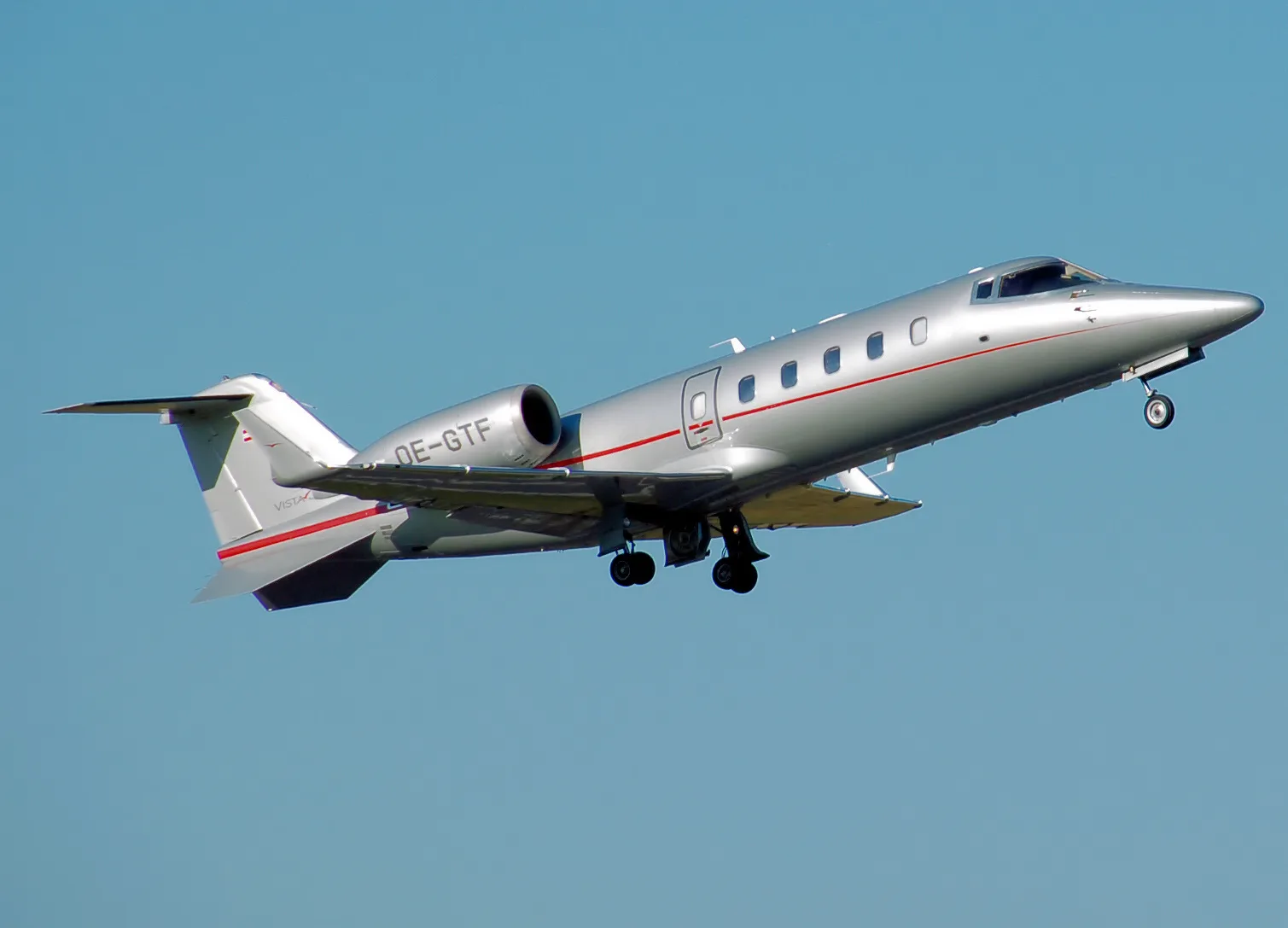
Cover photo: a Bombardier Learjet 60 (OE-GTF, not the accident aircraft) climbing away from London Luton. Photo by Adrian Pingstone, released into the public domain, via Wikimedia Commons.
Related reading: Controlled Flight Into Terrain and Human Factors training.
Reviews
No reviews yet. Be the first to review this article.
Sign in to leave a review Reviews come from members only.
Keep learning
Take the course Crew Resource Management: Learning from Real Flights: free with a Digital Aviator account.