That pre-flight coffee may be hiding a bigger problem
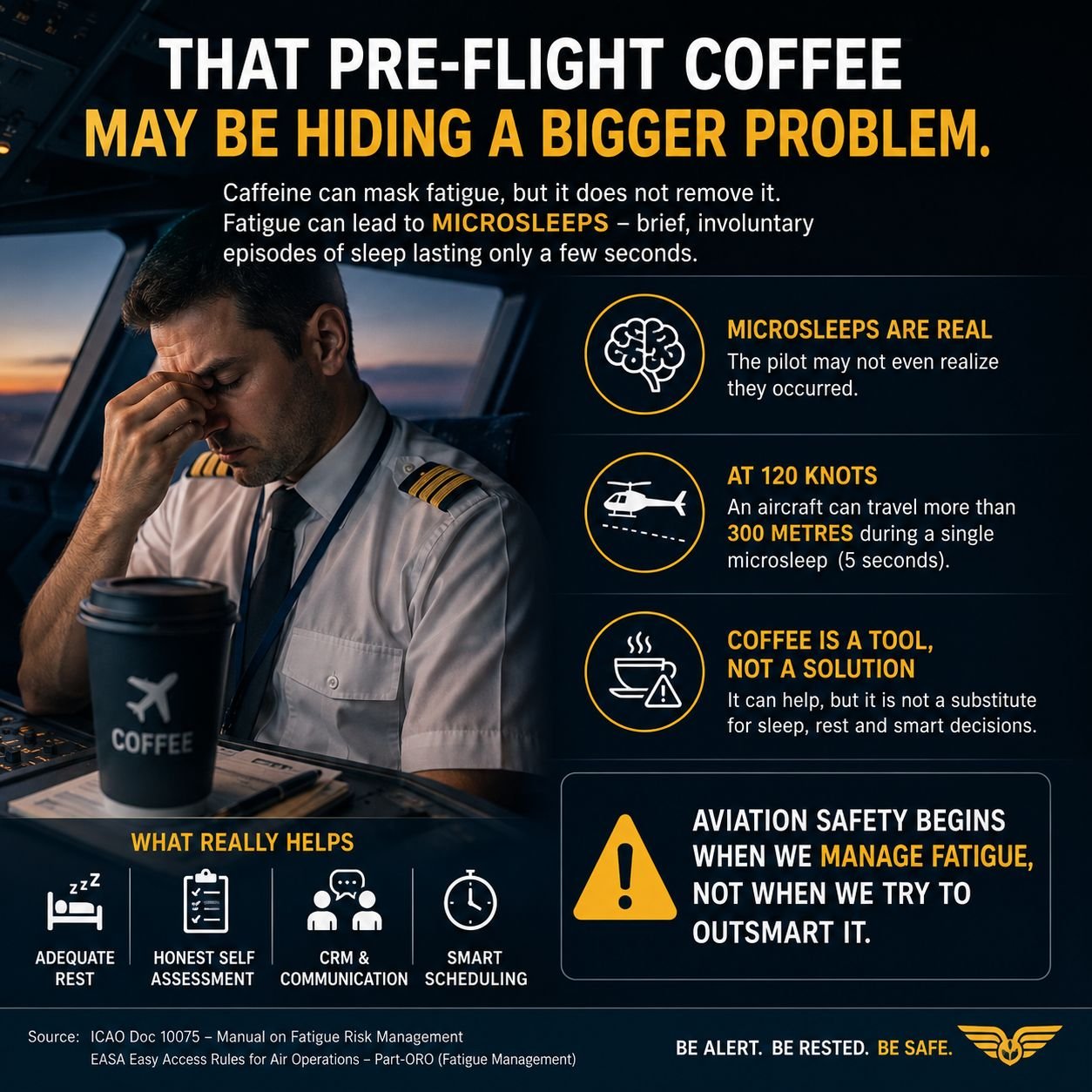
Caffeine can mask fatigue, but it doesn't remove it. Why microsleeps are so dangerous, what the numbers look like at 120 knots, and what actually helps.
Many of us reach for a coffee before a flight to feel more alert. Used well, caffeine is a legitimate fatigue countermeasure. The problem starts when it becomes a way to feel rested without actually being rested.
Caffeine can temporarily mask fatigue. It does not eliminate it.
Microsleeps: the danger you don't notice
A microsleep is a brief, involuntary episode of sleep, typically lasting from a fraction of a second up to several seconds. The person often does not realise it happened — eyes may even stay open while the brain stops processing what it sees.
Fatigue makes microsleeps more likely, especially in low-stimulation phases: a long cruise, a night sector, a monotonous transit. Caffeine can delay that feeling of sleepiness, but the underlying sleep debt is still there.
What a few seconds mean in the air
| Speed | Distance in 1 s | Distance in 3 s | Distance in 5 s |
|---|---|---|---|
| 120 kt (helicopter or light aircraft) | ≈ 62 m | ≈ 185 m | ≈ 309 m |
| 250 kt (below FL100) | ≈ 129 m | ≈ 386 m | ≈ 643 m |
| 450 kt (cruise) | ≈ 231 m | ≈ 694 m | ≈ 1,157 m |
A three-second microsleep at 120 knots means flying the length of almost two football pitches without anyone actively monitoring the aircraft. Close to the ground, at night or in a busy terminal area, that is more than enough for a situation to change completely.
The real trap: false confidence
The most dangerous moment is not when you feel tired. It is when you believe you're fine because the coffee is working. That belief can lead to:
- accepting an extra sector or a longer duty than you would otherwise,
- skipping a planned rest or controlled-rest opportunity,
- under-reporting fatigue because "I don't feel that bad".
What actually helps
- Sleep is the only real fix. Protect sleep opportunities before early starts and night duties; plan rest, don't hope for it.
- Use caffeine strategically. Its effect typically starts after roughly 20–30 minutes and can last several hours, so timing matters — a late-duty coffee can also wreck the recovery sleep you need afterwards.
- Be honest in self-assessment. Use tools such as IMSAFE before every flight, and say so when you're not fit.
- Work as a crew. Tell the other pilot if you're tired, increase cross-checking, and use your operator's procedures (including controlled rest where approved).
- Report fatigue. Fatigue reports feed your operator's Fatigue Risk Management. Reporting without fear is part of a healthy safety culture.
Check yourself
Knowledge check
Further reading
- EASA Air Operations rules on flight time limitations and fatigue risk management (ORO.FTL).
- ICAO Manual for the Oversight of Fatigue Management Approaches (Doc 9966).
Keep learning
Try the free course Human Factors Essentials for Pilots, or create an account to follow new articles.